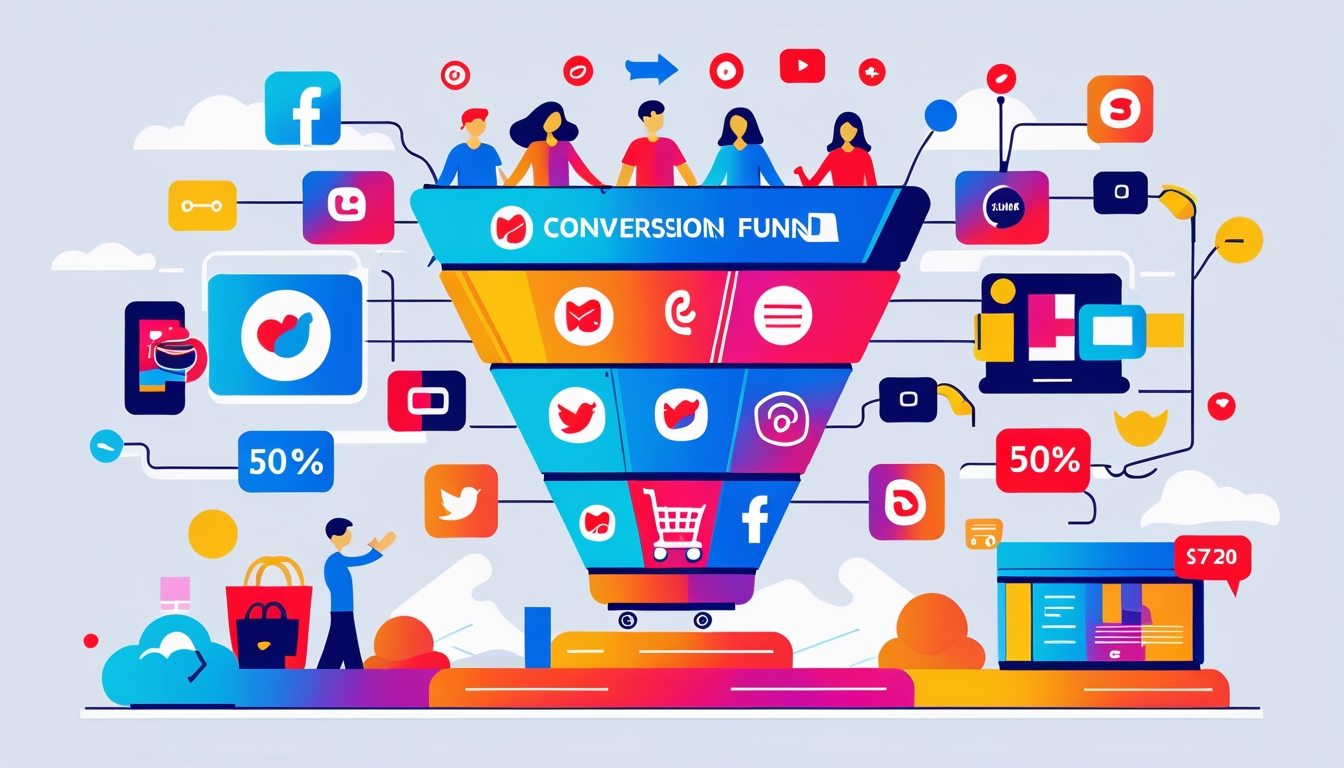
Growing a social media following feels productive, and it is. But followers alone do not pay the bills. The gap between having an engaged social media audience and generating revenue from that audience is where many Australian businesses struggle. Converting followers into customers requires a deliberate strategy that guides people through a journey from awareness to interest to action.
Understanding the Social Media Conversion Funnel
Social media operates at every stage of the customer journey, but most businesses focus almost exclusively on the top of the funnel: awareness and reach. They create content designed to attract followers and generate engagement, which is important but insufficient on its own. To drive sales, you need content and systems that operate across the entire funnel.
At the top of the funnel, your content builds awareness and attracts new followers. This includes educational content, entertaining posts, and shareable material that introduces your brand to people who have not encountered it before. In the middle of the funnel, your content builds trust and consideration. This includes testimonials, case studies, behind-the-scenes content, and detailed information about your products or services. At the bottom of the funnel, your content drives action. This includes limited-time offers, clear calls to action, product demonstrations, and direct invitations to purchase or enquire.
Most businesses have too much top-of-funnel content and not enough middle and bottom. A healthy content mix allocates roughly 40 per cent of posts to awareness, 30 per cent to trust-building, and 30 per cent to conversion-focused content.
Building Trust Before Asking for the Sale
Australian consumers are generally cautious about purchasing from brands they discover on social media. Trust must be established before a follower is willing to become a customer. The most effective trust-building content includes genuine customer testimonials and reviews shared in their own words, detailed case studies showing real results with specific numbers, behind-the-scenes content that shows the people and processes behind your brand, educational content that demonstrates your expertise without requiring a purchase, and consistent presence that shows your brand is established and reliable.
Trust-building is a cumulative process. A single testimonial post will not convert a follower into a customer. But consistent exposure to trust signals over weeks and months gradually shifts perception from casual follower to potential customer to ready buyer. Be patient with this process and resist the temptation to push sales too aggressively before trust is established.
Creating Effective Calls to Action
Every conversion-focused post needs a clear, specific call to action. Generic requests like check out our website are vague and easy to ignore. Effective calls to action are specific about what you want the person to do, what they will get when they do it, and why they should do it now.
Compare these two approaches. The first says visit our website to learn more. The second says book your free 15-minute consultation this week and receive a personalised social media audit, limited to 10 spots per month. The second is specific, valuable, and urgent. It tells the reader exactly what to do, what they get, and why acting quickly matters.
Vary your calls to action based on where the audience is in the conversion funnel. For cold followers, a low-commitment action like downloading a free guide or signing up for a newsletter is more appropriate than asking for a purchase. For warm followers who have been engaging with your content over time, a direct purchase or booking request is appropriate.
Using Direct Messages Strategically
Direct messages are one of the most underutilised conversion tools on social media. When someone engages meaningfully with your content, whether by asking a question in the comments, responding to a poll in your Stories, or saving a product-focused post, it creates an opportunity for a personalised follow-up through direct messages.
The key is to be helpful rather than salesy. If someone comments on a post about your product asking about sizing, respond publicly and then follow up via DM with a detailed sizing guide and an offer to answer any other questions. If someone responds to a Story poll about their biggest marketing challenge, send them a relevant resource or blog post that addresses that challenge. These interactions feel like genuine customer service rather than sales outreach, and they build the kind of personal connection that drives conversions.
Landing Pages That Convert Social Traffic
The transition from social media to your website is a critical moment in the conversion process. If someone clicks a link in your bio or a Story and lands on a page that is slow, cluttered, or irrelevant to what attracted them, you lose the conversion. Every link from your social media should lead to a purpose-built landing page that matches the promise of the social content.
Effective landing pages for social media traffic are mobile-first, since the vast majority of social media traffic comes from mobile devices. They load quickly, ideally within three seconds. They have a single, clear call to action rather than multiple competing options. They match the visual style and messaging of the social content that drove the click. And they remove navigation menus and other distractions that might lead visitors away from the conversion action.
Retargeting Your Engaged Audience
Not everyone who visits your website from social media will convert on their first visit. Retargeting allows you to show ads to people who have already interacted with your brand, keeping you visible as they move through their decision-making process. Meta's advertising platform allows you to create custom audiences based on people who have visited specific pages on your website, engaged with your Instagram or Facebook content, or watched your video content.
Retargeting ads should be different from your awareness advertising. Since these people already know your brand, focus on conversion-focused messaging such as customer testimonials, limited-time offers, or reminders about products they viewed. Retargeting typically delivers a much lower cost per acquisition than cold advertising because the audience is already familiar with and interested in your brand.
Measuring the Conversion Path
Understanding how your social media followers become customers requires proper tracking infrastructure. At minimum, install the Meta Pixel on your website, set up Google Analytics with conversion goals defined, use UTM parameters on all links shared through social media, and track key conversion events including form submissions, purchases, phone calls, and email sign-ups.
Review your conversion data regularly to understand which social platforms drive the most revenue, not just the most traffic. A platform that sends fewer visitors but those visitors convert at a higher rate may be more valuable than one that sends high traffic with low conversion. This analysis helps you allocate your time and resources to the activities that generate the most business impact.
The path from follower to customer is not always linear, and it rarely happens instantly. But by building a deliberate strategy that nurtures followers through trust-building content, provides clear and compelling calls to action, creates seamless transitions to conversion-optimised landing pages, and uses retargeting to stay visible during the decision process, Australian businesses can turn their social media presence into a consistent source of new customers and revenue.
Ready to turn your social media followers into customers?
Get a Free Consultation